Pages

Monday, February 28, 2011

The Bible Story Handbook

The Bible Story Handbook: A Resource for Teaching 175 Stories from the Bible is a relatively new release from Crossway Books. It is, as it says, a resource book. It caught my attention primarily because we're "in the zone" of telling Bible stories to our children and I love making good use of good resources. Coming from Crossway, I figured this was a safe bet.

Authors John H. Walton & Kim E. Walton put together this resource to aid in teaching children to know God through the stories. In the (lengthy) introduction - Why Do We Teach Bible Stories? - they discuss the fact that Bible stories and curriculum today focus primarily on teaching facts or drawing personal applications frequently unrelated to God and His character. This concerned them enough that they wanted to put this book together. Mostly, the authors are addressing Sunday School teachers and pastors in this book, assuming that they will be the primary audience. That may be true but I find it equally helpful as a parent as parents are the ones who front the large majority of their children's questions.

The Waltons aren't all together slamming the use of curriculum in Sunday School classrooms, but they are cautioning total reliance on it and using it just because that is "what is always done." They challenge the teachers to focus more on scriptures and less on prepared papers that tend to ignore discussions of the greatness of God, instead focusing on things like friendship, learning about the world around you, etc.

As the title suggests, they cover 175 Bible stories, beginning with the Creation and ending pretty much with Acts. (They have one lesson concerning Revelations but that's it.) Each lesson includes the following 7 elements to help the teacher as they relay scriptures:

  • Focus of the story
  • Theme of the story
  • Application
  • Place in the Bible
  • Interpretation issues
  • Historical and Cultural Background
  • Mistakes to Avoid
I think the interpretation issues in particular are worth noting. Find a Christian without a strong opinion on any given topic and, well, I'd be kinda worried actually. Take for instance the issue of creation. The authors note that there are many opinions as to the length of days in question, how much God created or what He may have set in motion, etc. Honestly, this really rankles me in some ways. I'd rather the authors make a decisive declaration in some direction. (I'm a black-n-white kinda gal.) I can understand why they would present the information telling the teacher what is not necessary to cover in some in-depth level, education-wise, with a toddler. I can also see how many people would find it helpful to understand some of the pitfalls and fall-outs they might encounter if they take a sharp stand on particular interpretations. (This does not mean I am not going to interpret the Creation story in one particular way. Because I do.) However, for classroom purposes, I get the point of the explanation. (It does raise some additional questions in my head about pastoral oversight and firm doctrine but that's a whole 'nother issue.)

I did appreciate several of the author's statements that they make in their introduction. Instead of explaining them myself, I'll just use quotes.

When speaking of their desire that shared/taught Bible stories not be focused on the individual characters in scripture or personal applications that we think ought to be made, the authors say the following:

"This is not to say that Scripture's teaching has nothing to do with human characters. The authors of the Bible note Abraham's faith and Job's righteousness. Though we certainly desire to emulate these commendable examples, they must not take the focus off God. Each of these narratives seeks to reveal something about God. The characters are the witnesses that testify to God's work, in their lives and circumstances, to His nature as He interacts with them, and to His plan. They point us to Him; that is their role. The problem with teaching about the "heroes and heroines of the Bible" is that the hero of the Bible is God. All people have flaws, even at their best. We dare not obscure the view of God to elevate human heroes." (Why Do We Teach Bible Stories, page 21)


And this quote is just fantastic:

"The teacher's task in application is to recognize and communicate Scripture's relevance rather than to make Scripture relevant." (Why Do We Teach Bible Stories, page 23)


I think The Bible Story Handbook is an interesting and useful tool and I would be curious to see what would happen if some churches would pick it up and discuss it with their staff and Sunday School teachers. I wonder how much it would revolutionize and change Sunday School programs. (And I also wonder how much it would have to, in particular churches.) In the meantime, as a parent, I find it useful and helpful in continuing to answer questions for my children.

Thanks, Crossway Books, for sending a copy of this my way to check out!

Friday, February 25, 2011

No Legal Grounds, by James Scott Bell

Here's the very fun thing about limiting review copies these days. I can FINALLY take the time to read books that friends recommend and loan to me. Hurrah!

One such book was No Legal Grounds, by James Scott Bell which I have had on my shelf for longer than I am willing to admit. (But I was finally able to give it back to the friend who loaned it to me!) That said, it did come down off the shelf at the perfect time because Jonathan and I have recently gotten into the legal drama/comedy/murder mystery series - Castle. (Raise your hand if you are fan! Sometimes gruesome murders aside, the show is written remarkably well and kudos to the other friend who recommended to us in the first place! She was right! We love it.)
No Legal Grounds is a piece of Christian fiction published by Zondervan. I say that because if you are at all familiar with Zondervan, that should leave you with a certain impression which I'm wondering whether or not I should spell out. (I have a certain impression of Zondervan and the laxness which I witness in their "Christian" materials. There. I've sort of spelled it out.) In the case of a legal thriller though, it almost rather suits. I dislike a lot of Christian fiction because it's written poorly, is not very believable, and is just sloppy stuff. I did, however, very much enjoy No Legal Grounds.

This is a legal thriller and kept me in suspense. Because of that, it's open to spoilers if I say too much about it. Instead I'll just tell you that the protagonist is an attorney named Sam who is a relatively new believer with some family struggles as a result of their past. Without warning, a "voice from the past" comes into his present and wrecks havoc with his family.

From the back cover:

"Suddenly Sam faces a danger more real than he ever imagined - danger from someone who will not rest until Sam's life comes crashing down around him. Desperate, Sam seeks protection from the law he's served all his life. But when the threats are turned on his family, and the law seems powerless to protect them, Sam must consider a choice that strikes at the heart of his life and faith - whether to take the law into his own hands."


Content that I would say is most important to be aware of:

Sam's daughter is a seventeen year old on the run from God. She wants to get into the rock music scene, and there are alcohol and drugs involved. Her life is in danger at a certain point as well. If you have a daughter (or one on the way!) this can be mentally and emotionally disturbing in points.

Otherwise, if you take it for a good, fun legal thriller - it is that. If you like either the Monk or Castle television shows, chances are you will like this book as well. It also reminded me of a good Harrison Ford "family-man-protecting-his-loved-ones" flick. Apparently James Scott Bell has written several such books and I think I'd like to read some others. Not any time soon, mind you. But it's good to know of him for when I'm feeling "in the mood" for some legal action that doesn't directly involve or affect me. (smile)

Thursday, February 24, 2011

Snow Buds


(Guess what we enjoyed around our house today?!)

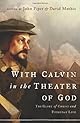
With Calvin in the Theater of God

**Review by Jonathan**

John Calvin. Although I was raised in a Christian home, attending various churches growing up, I was almost completely unfamiliar with his work and role in the Protestant Reformation. I always perceived Luther as the figurehead of the Reformation, dueling heroically against the Roman Catholic traditions, and any other players fell by the wayside.

But, having recently been working my way through Reformed theology, my attention was caught by this book, and I bargained with Carrie to read it first. ("OK, fine, but you'll have to review it...") So, without further ado, I bring you "With Calvin in the Theater of God: The Glory of Christ and Everyday Life".

Calvinism these days comes up more often as a heady platform for theological debate, than as a nuts-and-bolts basis for the way we live our lives and handle our relationships. It's easy to be dismissive of theology and relegate it to the "ivory tower" of academic philosophy. As long as our pastor can boil it down into something relevant for us on Sunday morning, right?! Hm. If only it were that easy.

This book does an excellent job of combating this divorce of theology from lifestyle, by reviewing how significantly John Calvin's theology was interwoven with his daily life and circumstances. The book consists of six chapters, each authored by a contemporary Reformed theologian. Their writing of Calvin is only mildly biographical, and primarily focuses on exploring six different facets of his theology, illustrating them with his personal life for added context. (Some aspects of Calvinism, such a predestination, can be "hot topics" of debate between Christians, but the essays in this book don't engage in heavy argument along these lines.)
  1. At Work & Worship: Calvin the Man & Why I Care by Julius Kim. This reviews the early life and conversion of Calvin, followed by his seminal writing of the Institutes of the Christian Religion, one of the earliest Reformed systematic theologies. His teaching on "Sola Scriptura" (scripture alone) and "Soli Deo Gloria" (the glory of God alone) emphasize how God is powerful, personal, and purposeful. Kim describes all this against the backdrop of Calvin's personal life, which was often plagued by ill health and difficult circumstances.

  2. Bad Actors on a Broken Stage: Sin & Suffering in Calvin's World and Ours by Mark Talbot. Throughout history, Christians have struggled with the natural tension of believing in an omnipotent, holy God, and at the same time observing the corruption of sin that has turned our world into such a train wreck. Talbot does a great job of assembling Calvin's writings on the sovereignty of God and summarizing them in a succinct way. One thought-provoking example from Calvin's Institutes:
    "Whence, I ask you, comes the stench of a corpse, which is both putrefied and laid open by the heat of the sun? All human beings see that it is stirred up by the sun’s rays, yet no one for this reason says that the rays stink. Thus, since the matter and guilt and evil repose in a wicked man, what reason is there to think that God contracts any defilement if He uses his service for His own purpose?"
  3. The Sacred Script in the Theater of God: Calvin, the Bible, & the Western World by Douglas Wilson. This chapter explores and dissects Calvin's extraordinarily high view of preaching, and the power expressed through declaring the Word of God. Wilson's writing style is quite readable (he can turn a phrase quite neatly), and he does a good job of contrasting Calvin's views with how the authority of scripture is often misrepresented by the navel-gazing of modern evangelicalism. Calvin writes,
    "Let the pastors boldly dare all things by the word of God. . . . Let them constrain all the power, glory, and excellence of the world to give place to and to obey the divine majesty of this word. Let them enjoin everyone by it, from the highest to the lowest. Let them edify the body of Christ. Let them devastate Satan's reign. Let them pasture the sheep, kill the wolves, instruct and exhort the rebellious. Let them bind and loose thunder and lightning, if necessary, but let them do all according to the word of God."

  4. The Secular Script in the Theater of God: Calvin on the Christian Meaning of Public Life by Marvin Olasky. Calvin was vocal and influential in describing the way our Christianity should influence our conduct toward the secular world of business, finances, relationships, law, and politics. Calvin's thoughts on these topics are more relevant than you might expect, given that we're separated from him by five centuries of progress world development.

  5. Living With One Foot Raised: Calvin on the Glory of the Final Resurrection & Heaven by Sam Storms. As Christians living amongst the chaos of today's society, reflection on Heaven and the afterlife tend to be more of an afterthought. Calvin's treatment of this subject is that,
    The lusts of the flesh hold us entangled, when in our minds we dwell in the world, and think not that heaven is our country; but when we pass as strangers through this life, we are not in bondage to the flesh.

    If meditation on the heavenly life were the prevailing sentiment in our hearts, the world would have no influence in detaining us.
  6. Jesus Christ as Dénouement in the Theater of God: Calvin & the Supremacy of Christ in All Things by John Piper. Calvin's theology places Christ squarely at the climax of history, around which all created things, past, present, and future, revolve. Piper describes the significance of this to our faith and life.

In summary, this book is a very approachable "birds-eye view" (from six different birds) of Calvinism, presented in a more relational, biographical way than theology is typically rehearsed. I found it to make for a good read (and short, at less than 175 pages), although the informational writing style leaves the step of personal application to the reader.

Note: The first half of the book can be read online at Google Books.

Thanks to Crossway Books for sending a copy for us to read.

Wednesday, February 23, 2011

Watercolor Birds Stationary

Peter Pauper Press. That's almost enough said right there, isn't it? Isn't it?!

I received their new Spring catalog and was happily greeted by this beautiful new Watercolor Birds design. I'm sure you will agree with me that they are charming, engaging and brightly full of warm weather promises. (Some of us might be waiting for that warm weather more than others!)

To get you in the mood for Spring (and happy correspondence) check these out:


Use these Watercolor Birds Note Cards to send your friends warm greetings. I've used Peter Pauper Press note cards before and can attest to their remarkably good quality. Their cards are so fresh and I love the variety of designs, but these just catch my eye in a special way.


Words. Words. Words. We readers do love to keep track of them, don't we?

Of course, I've talked about their journals before. Use this Watercolor Birds Journal to record the many blessings of the current year or hopes for the future. I know that some of you like to keep a journal of the books you've read and what you thought of them. This is a very pretty way to do that!


Peter Pauper Press is also the producer of the i-clips which I love so very much. However, I find it very difficult to resist a beautiful bookmark. I was sent one of these bookmarks to use for myself and I'm enjoying it. It's just lovely. I love pretty things. Remarkable, hmm? What a fun thing to tuck away in your book of choice.

The most wonderful news of all? Peter Pauper Press has offered a set of the three Watercolor Birds items listed above to one of you. Would you like to win? (Duh.) Simply leave a comment below. This contest is open to U.S. Residents only and will be open through Tuesday, March 1st.

THIS CONTEST IS NOW CLOSED. THE WINNER (as selected by Random.org) IS #16 - SKY. CONGRATULATIONS!

Thank you, Peter Pauper Press for continuing to provide pretty things for us to drool over and for your generosity as well!

Tuesday, February 22, 2011

Footwork, by Roxane Orgill


Footwork: The Story of Fred and Adele Astaire is part of the Candlewick Press collection and is a marvelous treat! If the name Fred Astaire has ever delighted or entertained you, you will love this book!

Now, I grew up on Classic movies. Loved them! Thoroughly enjoyed musicals and I've devoured quite a few Fred Astaire movies in my (comparatively) short days. I was delighted to discover that there was a picture book about Fred and his sister, Adele.

This book documents the story of Fred's younger days when he danced with his sister. We see them grow up and see his sister wander away from the life of the stage. I would say the world benefited from her disinterest in dancing after a time as it eventually put Fred in a position where he was "discovered" for films. The rest, as they say, is history.

I know I'm not the only one who loves a good musical and I cannot be the only one who enjoys Fred Astair's creative flair. I simply had to point this book out to my fellow musical-loving fans! This book is a MUST if you have any history with older films and I hope you'll hunt it down and enjoy it.

Thanks, Candlewick, for allowing me the pleasure of the read!

Monday, February 21, 2011

What's On My Nightstand

What's On Your NightstandTime again to check in the Nightstand to see how much progress we've made and to set reading goals for the following month. This meme, by 5 Minutes for Books, really is fun. I find it a good way to keep myself on track and set reading priorities for each month.

I'm also happy to say I accomplished all of my goals for last month! All titles below are linked to my reviews/thoughts.

  • I read The Hunger Games and had mixed feelings about it.
  • I read The Duggars: 20 and Counting! and liked it (despite the opposing emotions felt by many.)
  • I read Think, by John Piper and found much to appreciate about it.
  • I completed reading my first ever Gilbert Morris book - The Crossing - and have a review of that forthcoming (with accompanying giveaway.) So you can stay tuned for that if you like.

Now, what's up for this month?

My friend Sky agreed to read A Tale of Two Cities alongside me, so it's my mission to make it through this classic work during the month of March. I would like to make it abundantly clear that I am reading this because my husband really liked it and NOT because Oprah picked it for her bookclub reading. (My timing is terrible!) I'm also reading it because Sky said she'd read it with me (for moral support?) I don't like Dickens. So we'll see how this goes.


I hardly want to commit myself to much more than that, but here are a few other titles I have reading intentions towards:


Nanny McPhee: Based on the Collected Tales of Nurse Matilda. I picked up the movie tie-in edition and I didn't think to check if it included the complete collected tales. It includes: Nurse Matilda, Nurse Matilda Goes to Town, and Nurse Matilda Goes to Hospital. (I've been too lazy to check and see if those are all of the Nurse Matilda stories. Anyone know the answer to that question?)


In Japan the Crickets Cry: How Could Steve Metcalf Forgive the Japanese? which looks like a fascinating tale. This one is a review copy so I really DO need to get to it and likely will.

Beyond that, I'd best make no promises. Although I do have a little stack here . . .

Off to see what is on everyone else's nightstands this month!

Think, by John Piper

Despite the fact that I sat on Think for longer than I intended (Jonathan beat me to it) I found it worth the wait.

I had to confess I was drawn to the title because I think people fail to do just this with their Christian faith. As a society we've grown complacent. We look at books about theology and we think they are too hard for us to read. We look at old hymns of the faith and consider them outdated and too difficult to sing. We run into someone who thinks differently than ourselves and we're sometimes too afraid to just stand up and say, "I disagree." Words as simple as that won't fall from our lips because we are afraid of the consequences. (And it's true. Tell someone you don't agree with them and hold fast to your convictions and you will be judged and attacked for it, if not simply thought poorly of.) All the more reason for us to learn how to think properly, so that we will be ready to give an answer when it is needed.

Then I opened the book and Piper gave me perspective. Oh yes, this is a book about thinking, to be sure. It is a book about learning to think Biblically, accurately and in a God-oriented way.

"Thinking is indispensable on the path to passion for God. Thinking is not an end in itself. Nothing but God himself is finally an end in itself. Thinking is not the goal of life. Thinking, like non-thinking, can be the ground for boasting. Thinking, without prayer, without the Holy Spirit, without obedience, without love, will puff up and destroy (1 Cor. 8:1). But thinking under the mighty hand of God, thinking soaked in prayer, thinking carried by the Holy Spirit, thinking tethered to the Bible, thinking in pursuit of more reasons to praise and proclaim the glories of God, thinking in the service of love - such thinking is indispensable in a life of fullest praise to God." (Page 27)


The basic message Piper is communicating in this book is that thinking's primary purpose is to drive us into passionate worship of God. It is to know Him more fully, to learn to serve Him with all of your heart, soul, and mind.

Thinking is to be an indispensable part of our Christian walk. Yet there is a call to emotions as well - since we were created with them and therefore must learn how to manage them! Having been on both sides of the church aisle, if you will, between thoughtful worship and an emotional experiences, I would have said before reading this book that both sides have merit. After reading it, I think the same. However, I do agree with Piper in the idea that relying solely on emotional experiences and "feel good" moments holds the potential for greater danger. If we lose our heads when pursuing Him in worship, failing to make a conscious effort to study Him and understand His words and His requirements then we are on dangerous ground. When we refuse to think, we subject ourselves to false teaching and poor influences which ultimately weaken our faith. Piper says this in his introduction:

"This book is a plea to embrace serious thinking as a means of loving God and people. It is a plea to reject either-or thinking when it comes to head and heart, thinking and feeling, reason and faith, theology and doxology, mental labor and the ministry of love. It is a plea to see thinking as a necessary, God-ordained means of knowing God. Thinking is one of the important ways that we put fuel of knowledge on the fires of worship and service to the world." (Introduction)


In other words, to be able to worship passionately, we must learn to love wisdom and knowledge. To learn is to grow in a myriad of situations but specifically to know the Lord.

"Get wisdom, and whatever you get, get understanding." Prov. 4:7

"How much better to get wisdom than gold! To get understanding is to be chosen rather than silver." Prov. 16:16


I think perhaps the chapter I enjoyed the most in this book was Piper's chapter on The Immorality of Relativism (Chapter 8) and helped me to understand what the arguments of Relativism is as well as how to think about it. I could write up an entire post just on the one chapter!

Think is very approachable book. Piper's writing style is easy to read and follow along with. It's hard to miss the points he is trying to make and his arguments are worth a listen.

Obviously, I liked it. I appreciated his emphasis on learning to love God and others. I appreciated the way he concluded the book by stressing the importance of non-thinkers relying on thinkers, and thinkers to admit and confess their ultimate dependence on God and to not shut out all emotions. I thought Think was well-balanced in both its approach to thought and its encouragement of it. I highly recommend it.

Friday, February 18, 2011

Dragon Picture Books and Figurines

Lately we have developed an interest in dragons. In trying to hunt down picture books on dragons, I've run into some difficulty. It's hard to find a book for a toddler that presents a dragon in a less-than-scary light (or in which the storyline isn't just plain ridiculous.)

Now, in this house, if you like a particular animal the first thing you do is collect an animal to accompany you on your journey of discovery. When it comes to animal figurines, our first pick is Safari Ltd. animals.

Do not underestimate the power of an animal figurine in developing a young person's imagination and interest in any type of creature. We have, literally, buckets of Safari Ltd. animals in our house that we have been slowly collecting and gathering. (We have entire families of hippos and elephants.) We like them because they are sturdy (they go everywhere with us - including into the bathtub), "we" sleep with them, we play with them and we call them our friends. (Actually, all of the animals have the magical ability to talk to Bookworm1. He even tells us about what his animal friends dream about at night!) We are close to our animals. I was delighted to check out some dragon samples from Safari Ltd. but my delight paled in comparison to Bookworm1's! They sent the following items for us to imagine with: Lair of the Dragons Collection 1 TOOB, the Mountain Dragon, and the Horned Chinese Dragon.


We were already in the possession of the Safari Ltd. Red Dragon:


Important things to note about Safari Ltd. animals if you are as detailed oriented as my four year old is:

  • Their realistic replicas are carefully sculpted by experts who study the anatomy of their various animals to make them as accurate as possible.
  • Your animals can do anything that you can imagine that they can do.

Important things to note if you are a parent:

  • All of their products are safety tested for lead and phthalates under stringent third party guidelines that meet both US and European standards.
  • These animals can entertain and help educate your children far beyond what you might have ever expected was humanely possible.

We are big fans, obviously, and these toys have only served to heighten our interest in learning more about dragons (and various other animals.)

As for the books we have found to "learn" from, they are as follows:

The Egg was recently purchased because it looked to hold great promise. Written and illustrated by M.P. Robertson, it tells the story of a young boy named George who discovers a very large egg underneath one of the chickens in his mother's chicken house. Pretty convinced that this egg is not housing a chicken, George brings it inside and sits on it himself, reading it stories. After a few days the egg starts to crack and, as you might suspect, a dragon emerges. George takes it upon himself to teach the dragon 'dragony ways' and a relationship forms between them. The illustrations by M.P. Roberston are not only beautiful, but approachable. The dragon is not presented in a fierce light, but has plenty of beautiful detail making this a perfect book for us. Bookworm1 and I both give this one two thumbs up.

The Knight and the Dragon,is written and illustrated by Tomie DePaola,is really a very humorous book. It tells the story of a knight who has never fought a dragon and a dragon who has never fought a knight. Both are quite clumsy about the ordeal and despite their bit of practice, they seem doomed to failure. (This title is vaguely reminiscent of The Reluctant Dragon, in my opinion.) Many of the pages in this book are wordless which is not something that we're used to or find much pleasure in. However, in the case of this particular story, I thought that a few pages of strict illustrations did a good job at telling the story and Bookworm1 was snickering his way through the tale. That's always a positive sign.

We also consulted our home book shelves and pulled a few from our piles. We had read and reviewed The Dragon and the Turtle, by Donita K. Paul and Evangeline Denmark in the past. Click here to read my review of The Dragon and the Turtle. This is a cute story of an unlikely friendship that develops between a dragon and a turtle. A sequel of this book has just recently come out - The Dragon and the Turtle Go on Safari - which we had a chance to preview. The illustrations in the book are all dark (the story takes place at night) which made this one a bit too scary for our four-year-old, but I would imagine than it would be highly enjoyable for an older reader.

An oldie but a goodie, which features a monster (that looks incredibly like a dragon!) is Sir Kevin of Devon. I've talked about why I like this book before and you can click on the title to read my thoughts. If you have a son and ever run across a copy of Sir Kevin of Devon - SNATCH IT UP! It's awesome.

I would be remiss if I failed to mention The Reluctant Dragon, by Kenneth Graham. This book tells the story of a dragon who is much more fond of poetry than of raiding the countryside. The townsfolk know of his existence though, and since dragons are known to be frightening and terrifying creatures, they arrange for the brave St. George to come and kill the dragon off. With the help of a young boy, a mock battle is staged between St. George and The Reluctant Dragon. This book was turned into a Disney short which I intend to talk about more later.

Lastly, we picked up a used copy of Saint George and the Dragon, by Margaret Hodges. This book is a Caldecott Medal winner and is an adaption of Spencer's The Fairie Queen. It tells the story of The Red Cross Knight and the Princess Una. The illustrations in this book are done by Trina Schart Hyman and they are absolutely breathtaking and beautiful. The dragon is a bit more on the fierce side, but not overly terrifying. The story is thrilling and it makes for a good read for young knights-in-training.

These are the books that we have found so far that will tell us wonderful stories about dragons while being appropriate for our age group. I've flipped through countless books and perused more than a dozen stories and have whittled it down to this. If you have a suggestion to make, we're all ears. Maybe you'll hit upon a title that we haven't yet explored and we can add to our dragon book treasures! (There's always hope, right?!)

Thanks to Safari Ltd. for sending us some samples of their dragon figures to play with!

Thursday, February 17, 2011

CSN Stores (again)

I know I already talked about this this past week. However, here we go again. CSN Stores has given me another opportunity to review some of their items and I'm takin' 'um up on it!

I've mentioned that I'm growing increasingly impressed with them and find their prices becoming more comparable with Amazon. They are even starting to offer free shipping on quite a number of their items. (They don't have books, musics and movies yet, but they do have everything from wooden swing sets to cooking ware and baby clothes!)

If you are looking for household items, this is a company that is worth checking in with! So far they've had everything I've ever looked for and, again, their prices are comparable.

Anyway, take a peek, see what you think and stay tuned for another CSN store review.

Loving the Little Years: Motherhood in the Trenches, by Rachel Jankovic

I had noticed this title - Loving the Little Years: Motherhood in the Trenches - coming down the pike from Canon Press. When I was asked if I would like to read a copy of it, you can bet I accepted post haste. Turns out the book couldn't have come at a better time!

Loving the Little Years arrived on a day when I was very much in the trenches - with the rats and snakes crawling all around me. To say it had been a rough day is an understatement. Jonathan came home from work, handed me the mail, and took over the child rearing for a bit. I opened up my copy of this book and read about half of it on the spot, wondering if I should save part of it for later to savor a bit. A quick devour was more necessary though. Not only could I identify with just about every word that Rachel Jankovic wrote, I found myself laughing outloud at points. (Not too surprising. She is the daughter of Doug and Nancy Wilson and I typically find their humor, well, humorous. Their daughter definitely has the Wilson flair when writing, although toned down a great deal more and specifically addressing motherhood to children five and under.)

For example, here is a passage that tickled my funny bone with its truth:

"I remember a time when I used to be much godlier. It was sometime in junior high and my room was clean. It must have been beautiful weather outside because the lighting was very nice in my room where I was reading my Bible every day and feeling really good. It was quite clear to me that my sanctification was progressing very well. As the feeling wore off, I remember looking back to that time as a high point. That was really living the Christian life." (From Chapter 2: In the Rock Tumbler)

Rachel and her husband, Luke, have five children under the age of five. Exact ages at the time of printing: 5, 4, 2 & 2 (twins, of course!) and 5 months. To say she's just a wee bit busy and periodically overwhelmed is a bit of an understatement. She does, however, make a point not to use the word 'overwhelmed' least she start believing it to be true, crippling her from the ability to lead a productive life.

But what is a productive life, exactly, when you have little ones running about? I'd like to know that myself. I'm sure some of you ask yourself the same question. The crux of Rachel's answer here would be that productivity IS serving the needs of your children and sacrificing what you think needs to be done, for what wants to be done right in front of you. In other words, when your children are little - your life is all about them. What you think might not have long term benefits (i.e., stopping everything to play a game of hide-n-seek) beats out cleaning the kitchen floor. As she reminds mothers, you won't remember or care much about how clean each room in your house might have been, but you will remember the joy and good times you experience with your children.

Mostly, I found this book to be encouraging. If a woman with five under five can find reasons to smile about life, surely this woman with two toddlers and a baby on the way can manage to get through a few days herself. More than just offering encouragement though, Rachel offers a bit of caution or, if you will, admonition to her reader that the parent needs to make sure that their heart attitude is correct before they go about correcting the behaviors of their progeny. She gives a few examples of times when situations come up that would (naturally) cause a mother to start stressing. Instead of coming down on the children for the chaos which they are unintentionally creating, Rachel urges the parent to examine their own heart. If we as parents interject our own sin into the equation, it's not likely that the situation with the children will improve or smooth out into a grace-filled learning experience.

Because of her emphasis on the heart attitude of the parent, Jankovic earned the endorsement of Tedd Tripp and R.C. Sproul, Jr. for Loving the Little Years: Motherhood in the Trenches. She earns mine as well (although that's probably not as big of a deal) for her forthrightness and honesty in addressing the everyday cares, concerns and stresses which mothers experience and deal with on a constant basis. She speaks with grace, encouragement and good humor, allowing the reader to see their flaws without feeling condemned for wanting to run away from home and hide out until chocolate and caffeine have been consumed and bedtimes have been observed.

No, life with little ones is not easy. As the back cover of this book suggests, Rachel did not write this book because 'mothering is easy' for her. She wrote it because it isn't. This I know full well. It was nice to hear someone else say so.

Thank you, Canon Press, for sending a copy of this my way. I needed it.
Top  blogs